

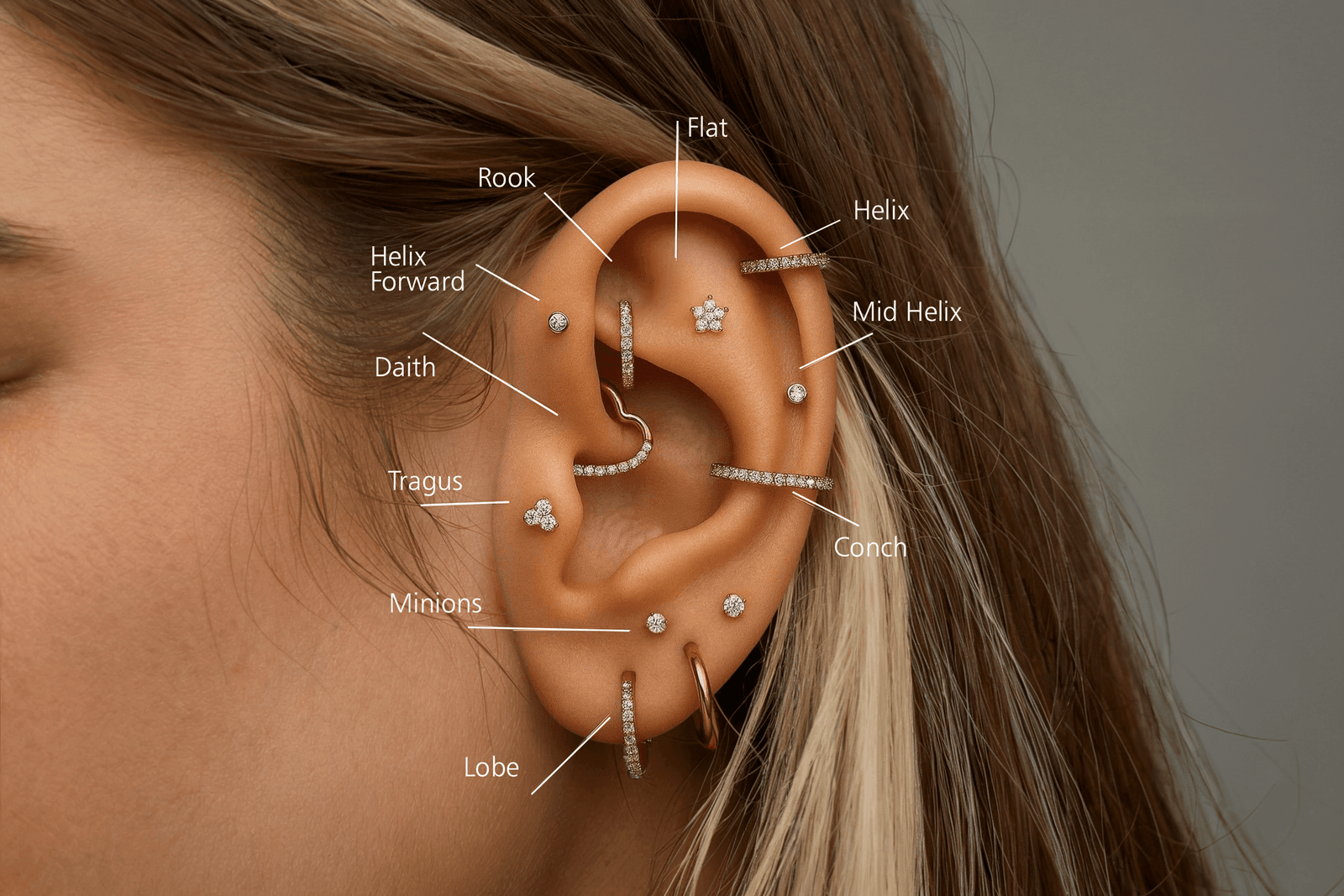
Getting your first few ear piercings is exciting — but knowing where to place them makes all the difference. A clear ear piercings placement chart can help you plan your look, understand healing times, and avoid overcrowding your ear. Whether you love a subtle lobe piercing or a full curated ear stack, here’s a simple guide to help you get started safely.
1. Start with the Basics: The Lobes
The earlobe is the perfect starting point for beginners. It’s the softest area of the ear, heals quickly (around 6–8 weeks), and works well with any jewelry type — from gold studs to small hoops.
💡 Tip: Keep at least 5–6 mm spacing between multiple lobe piercings to avoid irritation and give your ear a balanced look.
2. Understand the Ear Piercings Placement Chart
An ear piercings placement chart divides your ear into specific zones:
- Lobe area – standard, upper, and transverse lobe
- Cartilage area – helix, flat, rook, daith, tragus, and conch
- Inner ear – more advanced spots that require extra care
Each spot has its own pain level, healing time, and ideal jewelry style. For instance, helix piercings take longer to heal (6–12 months), while lobes heal much faster.
3. Don’t Rush the Process
Many beginners get excited and pierce multiple spots at once. However, your body heals better when you give each piercing enough time. Avoid doing more than three piercings per session, especially if they’re in cartilage areas.
Also, resist the urge to change jewelry too early — wait until it’s fully healed.
4. Choose Hypoallergenic Materials
Always choose 14K gold, titanium, or high-quality metal for your first piercings. Cheap or plated jewelry may cause reactions or infections. Remember, the placement chart is just a visual guide — your comfort and skin sensitivity matter more.
5. Map Out Your Future Ear Stack
Use the placement chart as a roadmap. If you plan to add more piercings later, leave space between each one. Think about symmetry, jewelry shapes, and how each piece will complement the others. Planning ahead helps your ear look intentional, not crowded.
A piercing placement chart is more than just a diagram — it’s your personal style map. Start slow, pick quality materials, and plan each piercing with intention. Before you know it, you’ll have a beautifully curated ear that tells your unique story.

Leave a Reply