

What Are Gauge Sizes in Ear Piercing Studs?
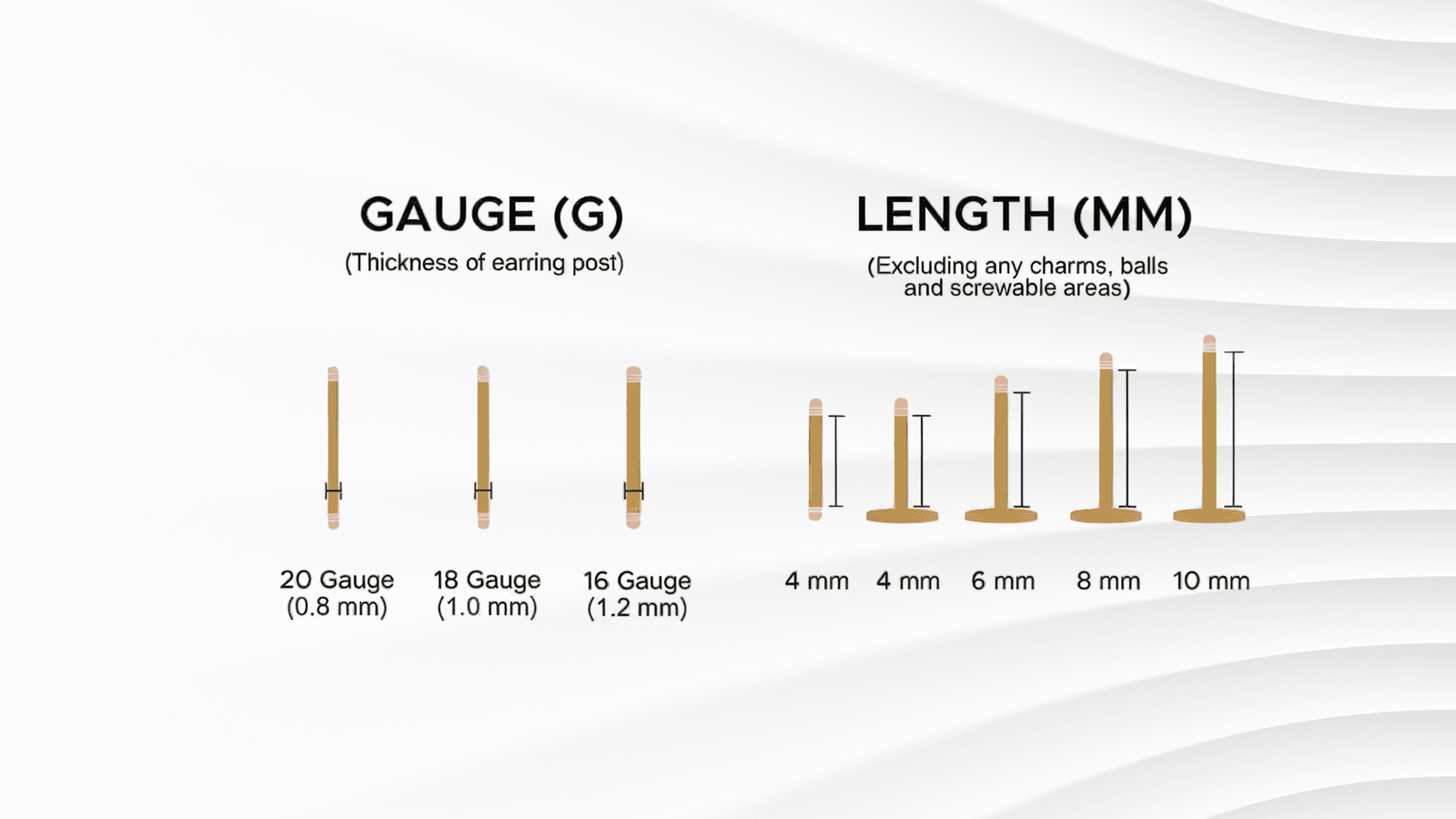
Gauge represents the thickness of the post. The lower the number, the thicker the jewelry.
Most ear piercing studs come in these common gauges:
- 18G (1.0 mm) – typically used for lobe piercings
- 16G (1.2 mm) – standard for cartilage such as helix, tragus, conch
- 20G (0.8 mm) – used for traditional butterfly-back earrings
Choosing the correct gauge helps prevent irritation, migration, and difficulty inserting jewelry later.
Understanding Post Length: Millimeters That Actually Matter
Post length determines how comfortably the stud sits in your ear.
The most common lengths are:
- 6 mm (0.24″) – ideal for healed lobes and tight placements
- 7–8 mm (0.27″–0.31″) – recommended for most cartilage piercings
- 9–10 mm (0.35″–0.39″) – suitable for swelling or thicker cartilage
A post that’s too short causes pressure and delayed healing. One that’s too long may snag on hair or clothing.
Why These Measurements Are Important
Correct size = safer healing, better comfort, and a cleaner look.
Using the right gauge and millimeter length helps:
- Minimize irritation
- Avoid embedding
- Keep the stud straight
- Improve long-term wearability, especially with flat-back designs
How to Pick the Right Fit
If your piercing is healing, cartilage tends to swell — so slightly longer lengths (7–8 mm) are safer.
For everyday wear, choose:
- 18G 6 mm for lobes
- 16G 7–8 mm for helix, tragus, rook, conch
- Flat backs for maximum comfort, especially during sleep
If unsure, always consult your piercer or choose the next size up and adjust later.

Leave a Reply