

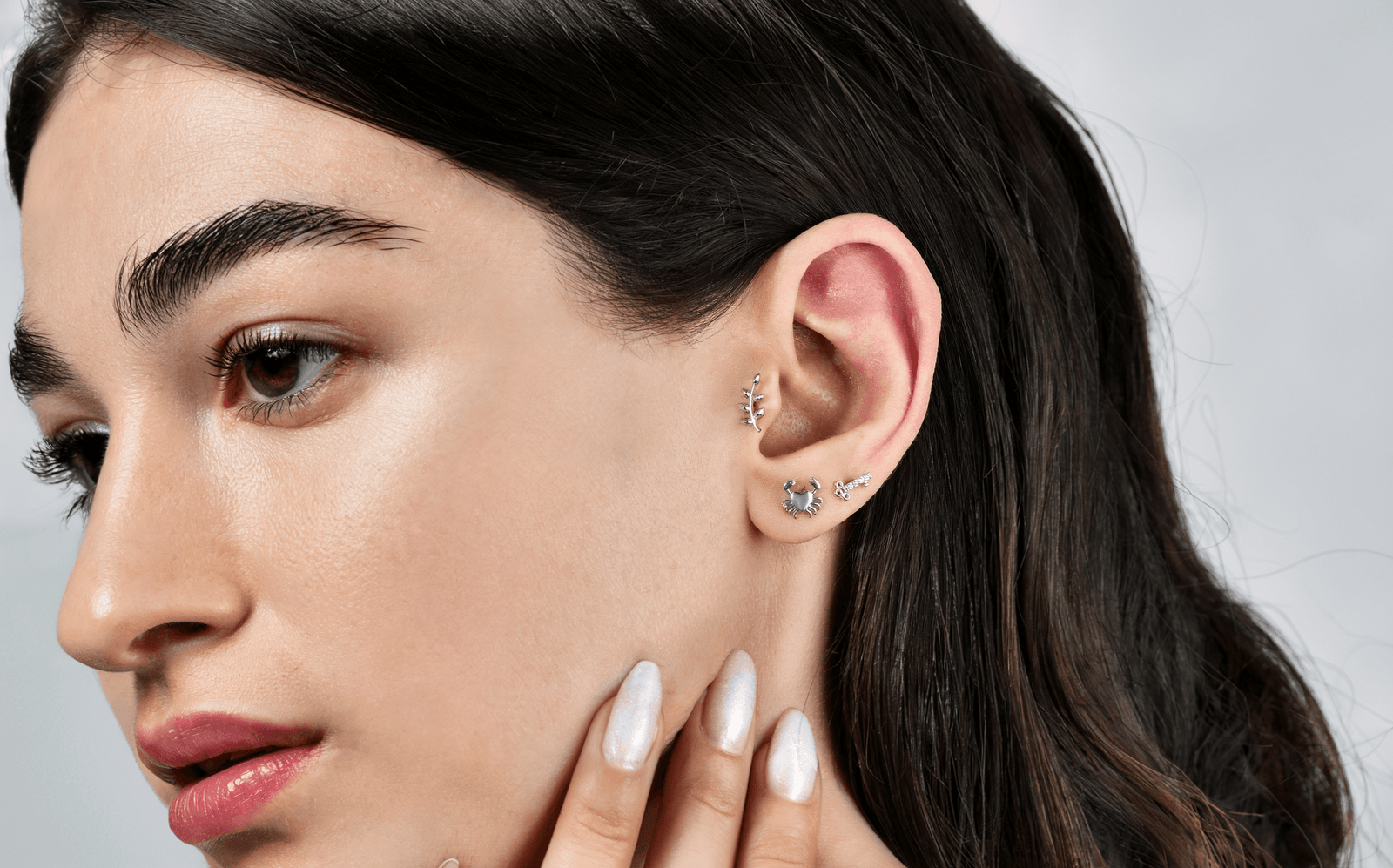
Silver piercings are popular for their clean look, versatility, and affordability. But when it comes to everyday wear, many people ask the same question: is 925 sterling silver actually safe for piercings?
The short answer is yes, with some important conditions. Understanding how sterling silver behaves on the skin, especially when paired with rhodium plating, makes all the difference.
What Is 925 Sterling Silver?
925 sterling silver is made of 92.5 percent pure silver combined with 7.5 percent other metals, usually copper. This alloy improves durability, but it also changes how the metal reacts when worn against the skin.
While sterling silver is widely used in jewelry, it behaves differently from materials commonly recommended for initial piercings.
Is 925 Sterling Silver Safe for Piercings?
925 sterling silver can be safe for piercings that are fully healed. However, it is not considered an ideal material for newly pierced ears or healing piercings.
The main reasons are oxidation and metal sensitivity. Silver can react with moisture and natural body fluids, which may cause discoloration or irritation if worn continuously.
The Role of Rhodium Plating
Rhodium plating significantly improves the performance of sterling silver for piercings. Rhodium creates a smooth, protective layer over the silver, reducing direct skin contact and slowing down oxidation.
Benefits of rhodium plated sterling silver include reduced risk of irritation, improved resistance to tarnishing, a smoother and more skin friendly surface, and a nickel free protection layer.
That said, rhodium plating is not permanent. Over time, especially with constant wear, the plating may wear down and expose the silver underneath.
Is It Suitable for Everyday Wear?
Rhodium plated 925 sterling silver piercings are suitable for everyday wear when the piercing is fully healed. They work best for daytime styling, occasional wear, or fashion focused looks rather than 24/7 use.
For people with very sensitive skin, rotating silver piercings with gold or titanium options can help minimize irritation.
When to Avoid Silver Piercings
Sterling silver piercings should be avoided for newly pierced ears or healing piercings, for extended 24/7 wear without removal, and during long exposure to water, sweat, or chemicals.
Silver vs Gold for Piercings
Gold and titanium remain the top choices for fresh piercings due to their stability and low reactivity. Sterling silver, especially when rhodium plated, is better positioned as a styling material for healed piercings.
In other words, silver piercings are best viewed as fashion forward accessories rather than healing jewelry.
Final Thoughts
925 sterling silver piercings can be safe for everyday wear when used correctly. Rhodium plating adds an important layer of protection, making silver a practical option for healed piercings and daily styling.
Knowing when and how to wear silver is key to keeping your piercings comfortable, healthy, and irritation free.

Leave a Reply