
If you are new to ear piercings, one of the most confusing things you might see is the word “gauge.” Jewelry sizes are often described as 20G, 18G, or 16G, and many people are unsure what those numbers actually mean.
Understanding piercing gauge sizes is important because the wrong size jewelry can cause irritation, discomfort, or slow healing. Whether you are getting your first lobe piercing or planning cartilage piercings like helix or tragus, knowing the standard sizes helps you choose jewelry that fits comfortably.
In this guide, we will explain what gauge means, the most common sizes used for ear piercings, and how to choose the right jewelry thickness.
What Does Gauge Mean in Piercings?
In body jewelry, gauge refers to the thickness of the jewelry post or bar that goes through the piercing hole.
The important thing to know is that the smaller the gauge number, the thicker the jewelry.
For example:
- 20G is thinner than 18G
- 18G is thinner than 16G
- 16G is thicker than both
This sizing system originally comes from the wire industry, which is why the numbers work in reverse.
For most ear piercings, the gauge size usually falls between 20G and 16G.
Most Common Gauge Sizes for Ear Piercings
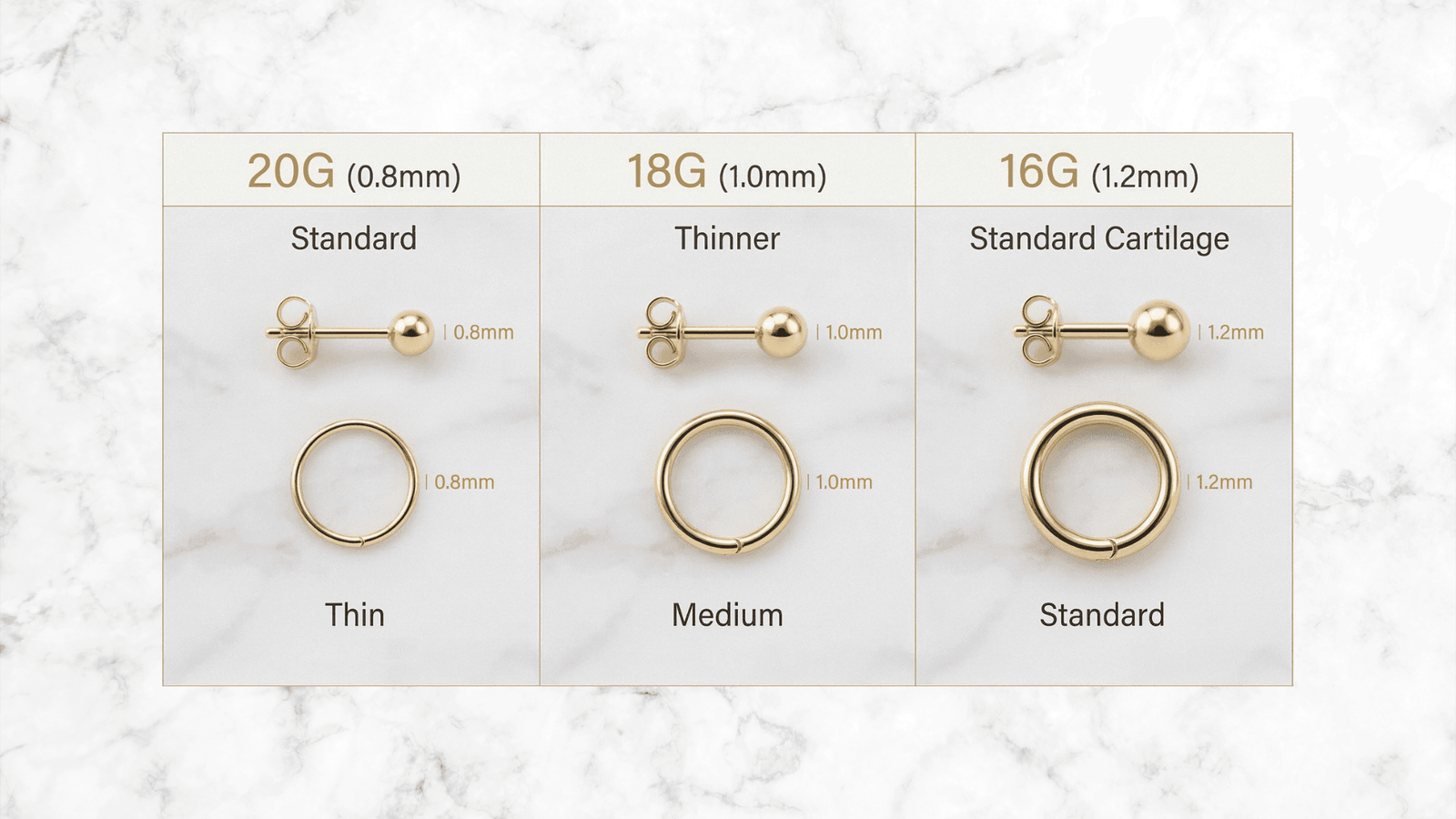
20G (0.8 mm)
20 gauge is one of the thinnest sizes used for ear jewelry.
It is commonly used for:
- Standard lobe piercings
- Traditional earrings
- Small fashion studs
Most earrings sold in jewelry stores use 20G posts, which is why many people are already familiar with this size.
Image name: ear-piercing-20g-size.jpg
Image alt: 20 gauge ear piercing jewelry size comparison for standard lobe earrings
18G (1.0 mm)
18 gauge is the most common size used by professional piercers for many ear piercings.
It is often used for:
- Lobe piercings
- Helix piercings
- Tragus piercings
- Forward helix piercings
This size provides a bit more stability than 20G while still remaining comfortable for everyday wear.
Image name: 18g-ear-piercing-size.jpg
Image alt: 18 gauge ear piercing jewelry thickness used for helix and lobe piercings
16G (1.2 mm)
16 gauge is slightly thicker and is commonly used for cartilage piercings.
You will often see it used for:
- Conch piercings
- Daith piercings
- Rook piercings
- Industrial piercings
Because cartilage is stronger tissue, piercers often choose 16G jewelry for durability and stability.
Image name: 16g-cartilage-piercing-size.jpg
Image alt: 16 gauge cartilage piercing jewelry used for conch and daith piercings
Why Piercing Gauge Matters
Choosing the correct gauge size is important for several reasons.
Comfort
Jewelry that is too thick for your piercing may feel tight or cause irritation.
Stability
Very thin jewelry can sometimes move too much, which may slow healing or cause discomfort.
Jewelry Options
Some piercing styles are designed for specific gauge sizes. For example, many cartilage hoops and flat-back studs are made for 16G or 18G.
Understanding your gauge helps you select jewelry that fits correctly.
Can You Change the Gauge Size Later?
In many cases, yes.
A piercing hole can sometimes stretch slightly to fit thicker jewelry, especially if the difference is small, such as moving from 20G to 18G.
However, going thicker should be done carefully and slowly. If you are unsure, a professional piercer can help guide the process.
Which Gauge Is Best for Ear Piercings?
For most people, these sizes work best:
- 20G for classic lobe earrings
- 18G for many modern ear piercings
- 16G for cartilage piercings
These sizes provide a balance between comfort, durability, and jewelry availability.
Conclusion
Gauge size is simply the thickness of the jewelry post, but it plays an important role in comfort and healing.
Most ear piercings fall between 20G and 16G, with 18G being one of the most commonly used sizes for both lobes and cartilage piercings.
Understanding these sizes makes it easier to choose jewelry that fits well and works with your piercing style, whether you prefer a simple stud or a fully curated ear.

Leave a Reply