
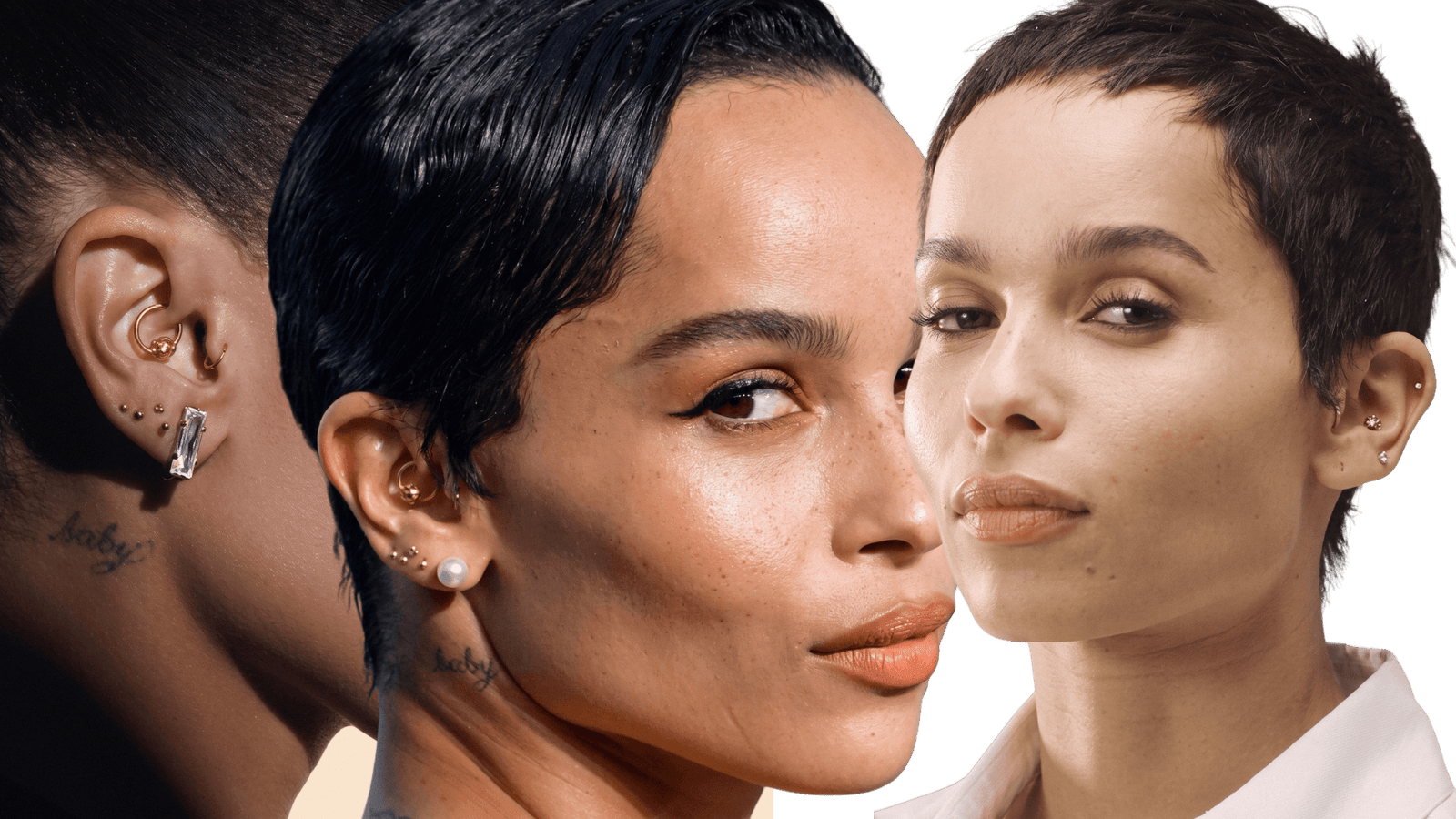
If there is one name that comes up again and again when people talk about curated ears, it is Zoë Kravitz. Her ear stack has become shorthand for a very specific aesthetic: warm gold, small stones, nothing matching too perfectly, and an overall effect that looks lived-in rather than assembled that morning.
What makes her look worth studying is that it is genuinely achievable. There are no oversized statement pieces doing the heavy lifting and no single dramatic placement carrying the whole ear. It is a slow build of small decisions, which is exactly how most great curated ears actually happen.
Here is what defines her style, and how to translate it to your own ear.
The Core of Her Style: Warm, Small, and Slightly Off-Balance
Three things show up consistently across her red carpet and off-duty looks.
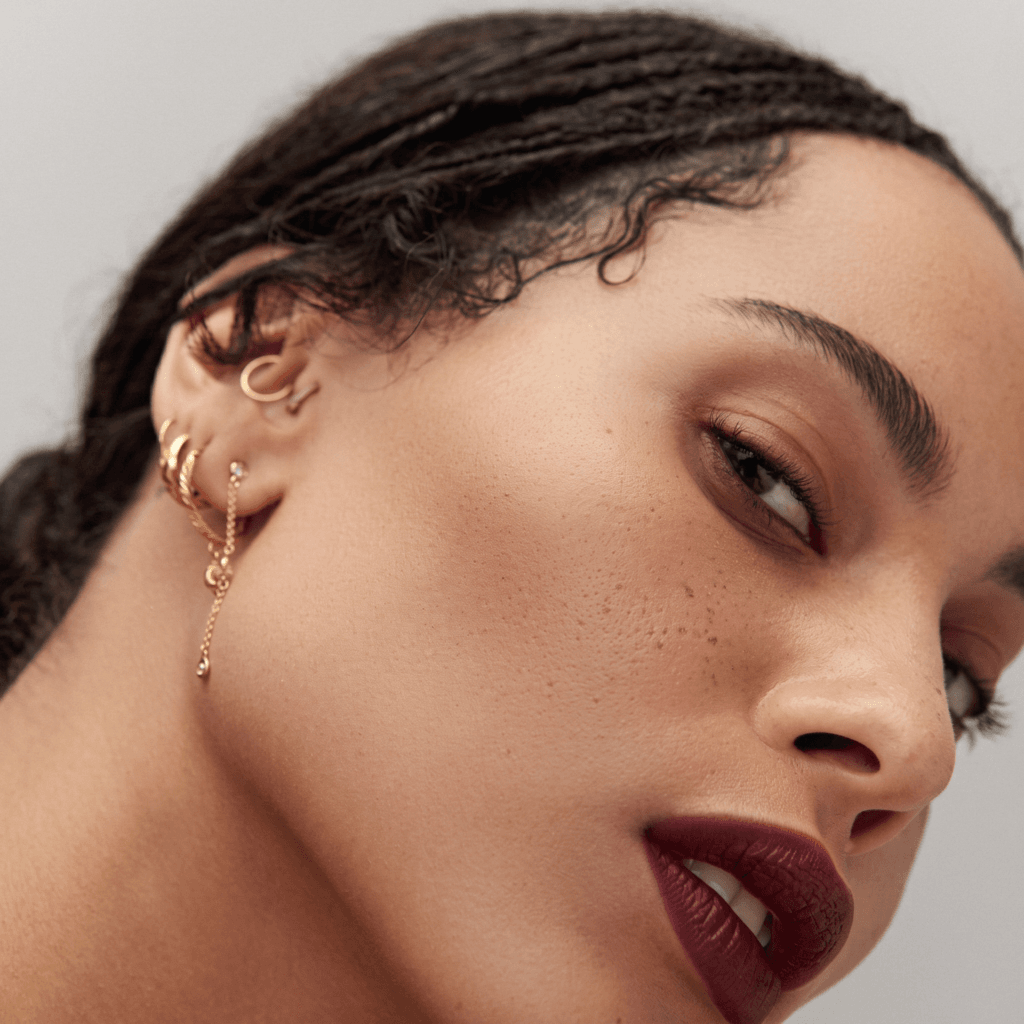
Yellow gold, almost exclusively. Her ear reads warm rather than cool. Sticking to one metal tone across several placements is one of the easiest ways to make a mixed stack look intentional instead of accidental.
Small stones over big ones. Tiny solitaires, thin bezels, and plain beaded hoops. The jewelry is meant to be noticed at conversation distance, not from across a room.
Deliberate asymmetry. Her two ears rarely mirror each other, and that is the point. One ear might carry a fuller cartilage cluster while the other stays quieter.
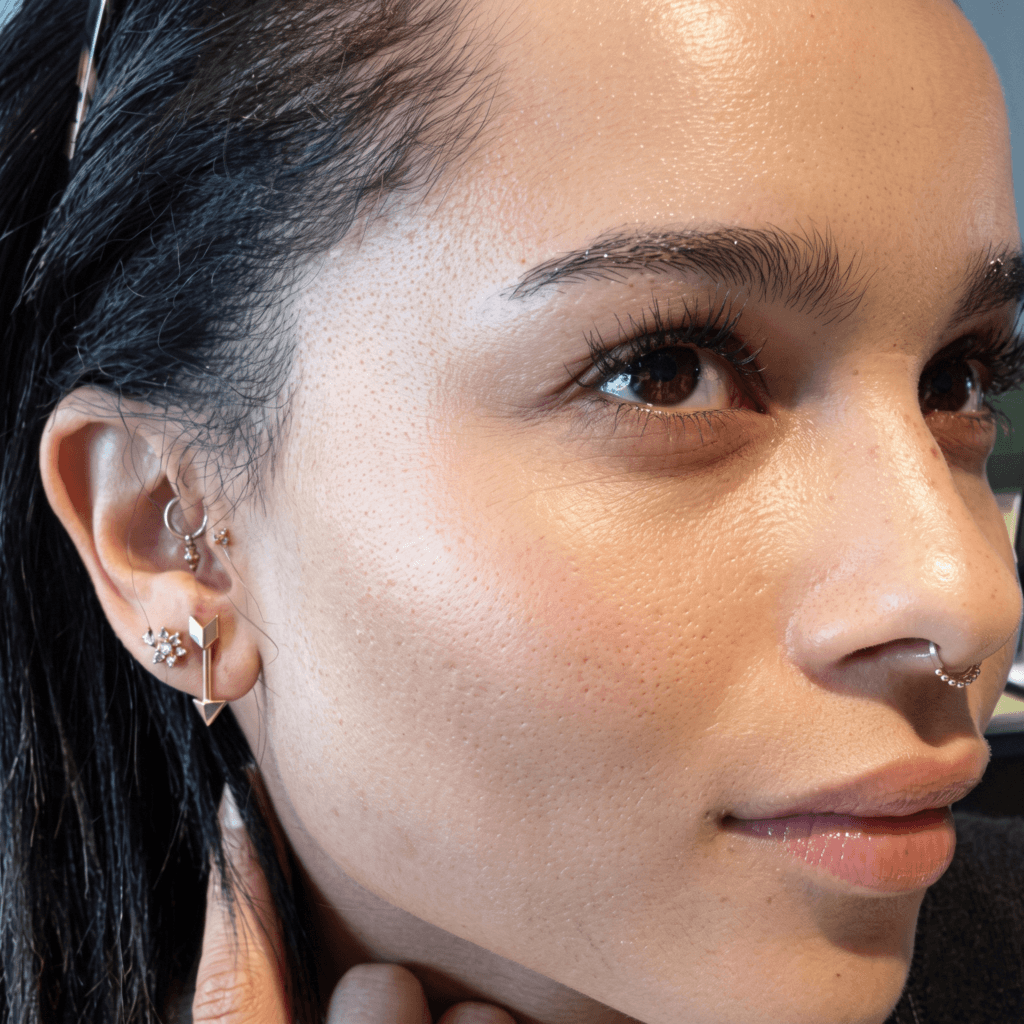
1. Stacked Lobes: The Foundation
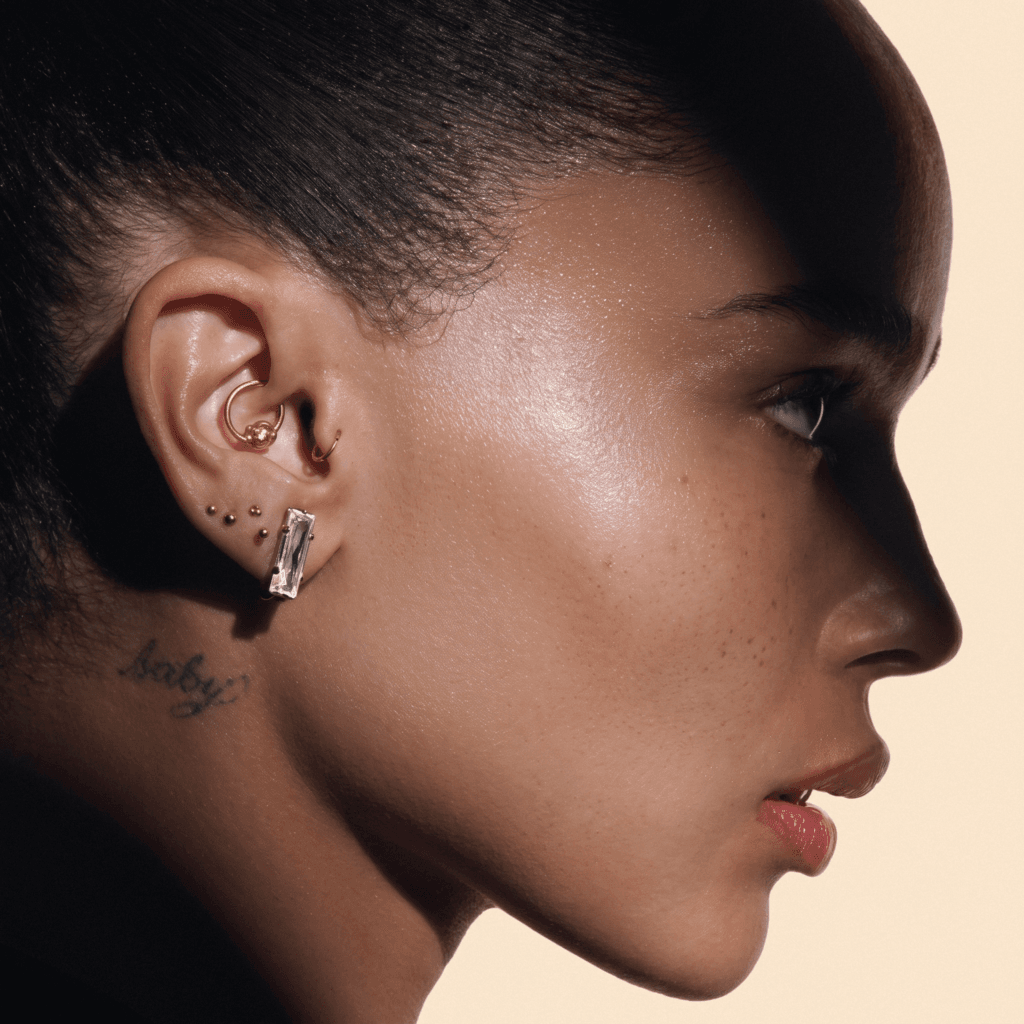
The base of her look is multiple lobe piercings, usually two or three per ear, sitting close together rather than spread across the whole lobe.
This is where most curated ears should start. Lobes are the most forgiving placement, they heal fastest, and they give you room to experiment with jewelry while you decide whether you want to go further up the ear.
Try this look:
- Two or three lobe piercings spaced roughly 5–7mm apart
- One small solitaire, one plain gold bead, one tiny huggie hoop
- Deliberately mismatched, not a matched set
If you want to add depth without adding width, look at our guide to vertical stacked lobe piercings.
2. Helix Placements: The Signature Move
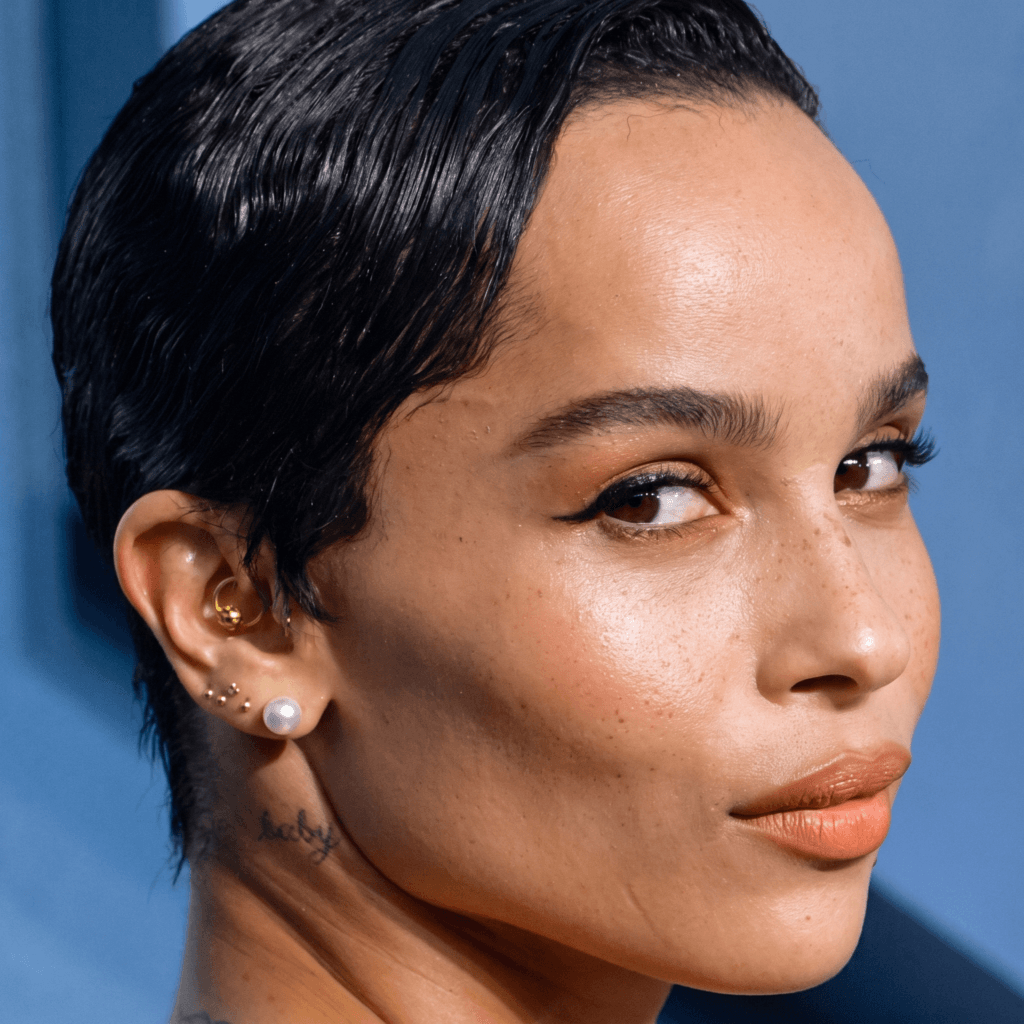
The upper cartilage is where her ear stops being a standard lobe stack and becomes a curated one. Thin gold hoops and small flat back studs along the helix are a recurring feature of her look.
The helix is the workhorse of ear curation for a reason. It sits on the visible outer rim, it pairs well with almost any lobe setup, and it accepts both hoops and studs comfortably once healed.
Try this look:
- One or two helix piercings, ideally placed in the same session so they sit in proportion
- A thin 8mm gold hoop paired with a 2mm bezel-set stud
- Flat back labret studs during healing for comfort
Before booking, read our helix piercing guide and check the realistic healing timeline. Cartilage takes months, not weeks.
3. Forward Helix and Tragus: The Quiet Details
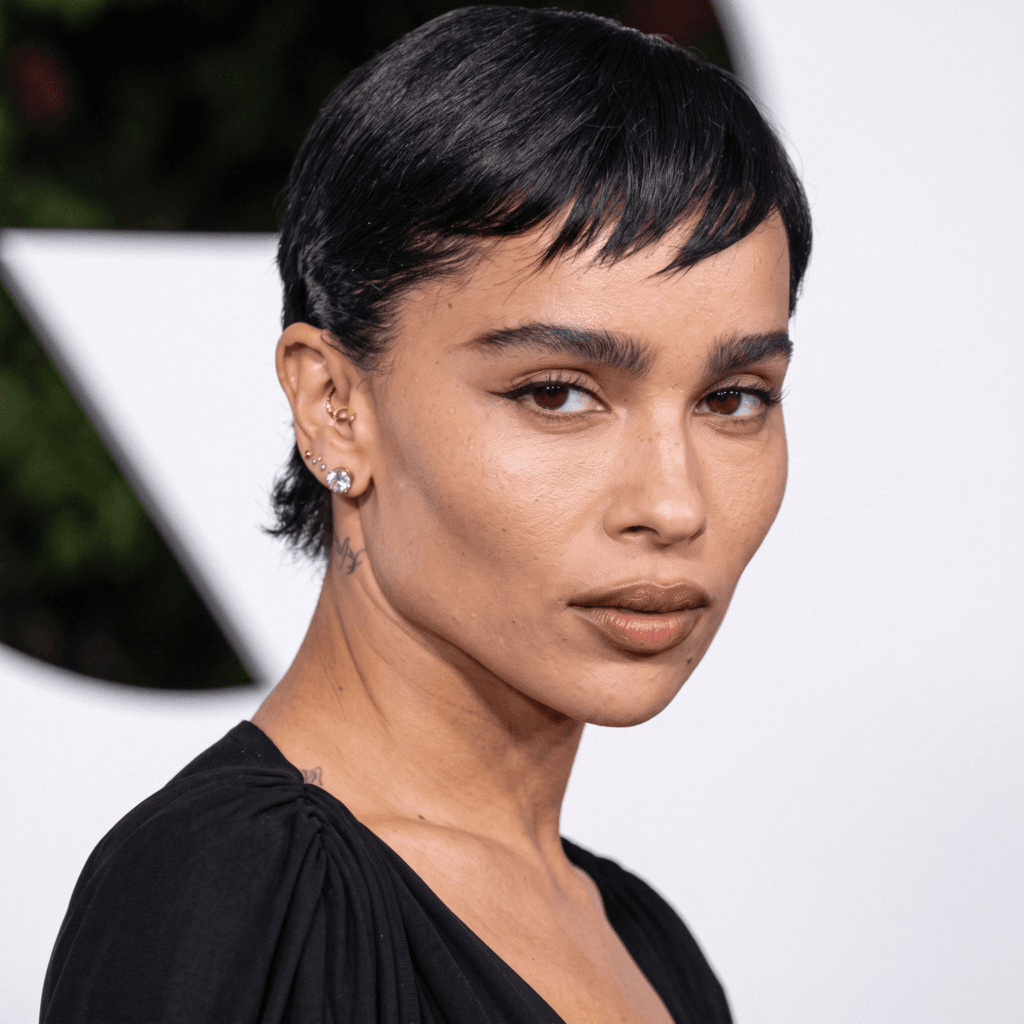
The smaller inner placements are what give her ear its finished quality. A forward helix stud or a delicate tragus piece sits close to the face and catches light from angles the outer rim does not.
These are subtle by nature. You will not spot them in every photo, which is exactly why they work as supporting pieces rather than focal points.
Try this look:
- A single forward helix stud with a 1.5–2mm stone
- A thin hoop or small stud in the tragus
- Keep these smaller than anything on your helix so the ear reads front to back
Our forward helix guide and tragus guide cover pain, healing, and jewelry sizing for both.
4. The Flat and Upper Cartilage Cluster
Her upper ear also uses the flat cartilage area, the wide smooth surface above the rook fold. This region gives you space for two or three small stones arranged as a cluster, which adds visual weight to the top of the ear without a single large piece.
If you like this part of her look specifically, two of our guides go deeper: flat piercing styling for constellation arrangements, and the tash rook guide for a more unusual upper cartilage accent.
Try this look:
- Two or three flat piercings in a loose triangle
- Graduated stone sizes, largest closest to the helix rim
- All the same metal tone

How to Build This Ear from Scratch
You cannot get this in one appointment, and you should not try to. Here is a realistic sequence.
Phase 1 (months 0–3): Lobes. Get two or three, wear them consistently, and let your body show you how it heals.
Phase 2 (months 3–9): One or two helix piercings. Do these together so a piercer can place them in proportion to each other and to your lobes.
Phase 3 (months 9–18): Forward helix, tragus, or flat placements. By now you know your healing tendencies and you can see where the gaps in your ear actually are.
Phase 4 (ongoing): Jewelry swaps. This is where most of the styling happens. Changing three studs costs nothing and often does more for your ear than a fourth piercing would.
Do not exceed two to three new piercings in a single session. See our guide on how many ear piercings you can get at once for the reasoning.
Jewelry Notes
- Metal: 14K solid gold or implant-grade titanium. Both are appropriate for healing cartilage. Read our take on getting pierced with 14K gold.
- Backings: Flat back labret studs for anything above the lobe. Flat back vs. butterfly back explains why.
- Hoop sizing: 6–8mm for helix, 8–10mm for lobes. Our hoop size guide covers fit in detail.
- Stone size: Nothing above 3mm if you want this specific aesthetic.
Frequently Asked Questions
How many piercings does Zoë Kravitz have? Her exact count has shifted over the years, as most people’s do. Photographs typically show multiple lobe piercings alongside several cartilage placements across both ears, with the two ears styled differently.
Can I copy her ear if my anatomy is different? Partly. Placements like the rook, daith, and forward helix depend on cartilage ridges that not everyone has in the same shape. A good piercer will tell you honestly what your ear can support. The metal tone, stone scale, and asymmetry are fully copyable regardless of anatomy.
Is this an expensive look to build? The jewelry is where the cost sits, not the piercings. Solid gold pieces add up. A workable approach is titanium during healing, then swapping to gold one piece at a time.
The Takeaway
The reason Zoë Kravitz keeps getting cited as the reference point for curated ears is that her look is built on restraint. One metal tone, small stones, and asymmetry that reads as confidence rather than accident.
Start with your lobes, keep the pieces small, and let the ear build itself over a year or two. That patience is the actual secret.
Which part of her ear stack would you want first? Tell us in the comments.

Leave a Reply