
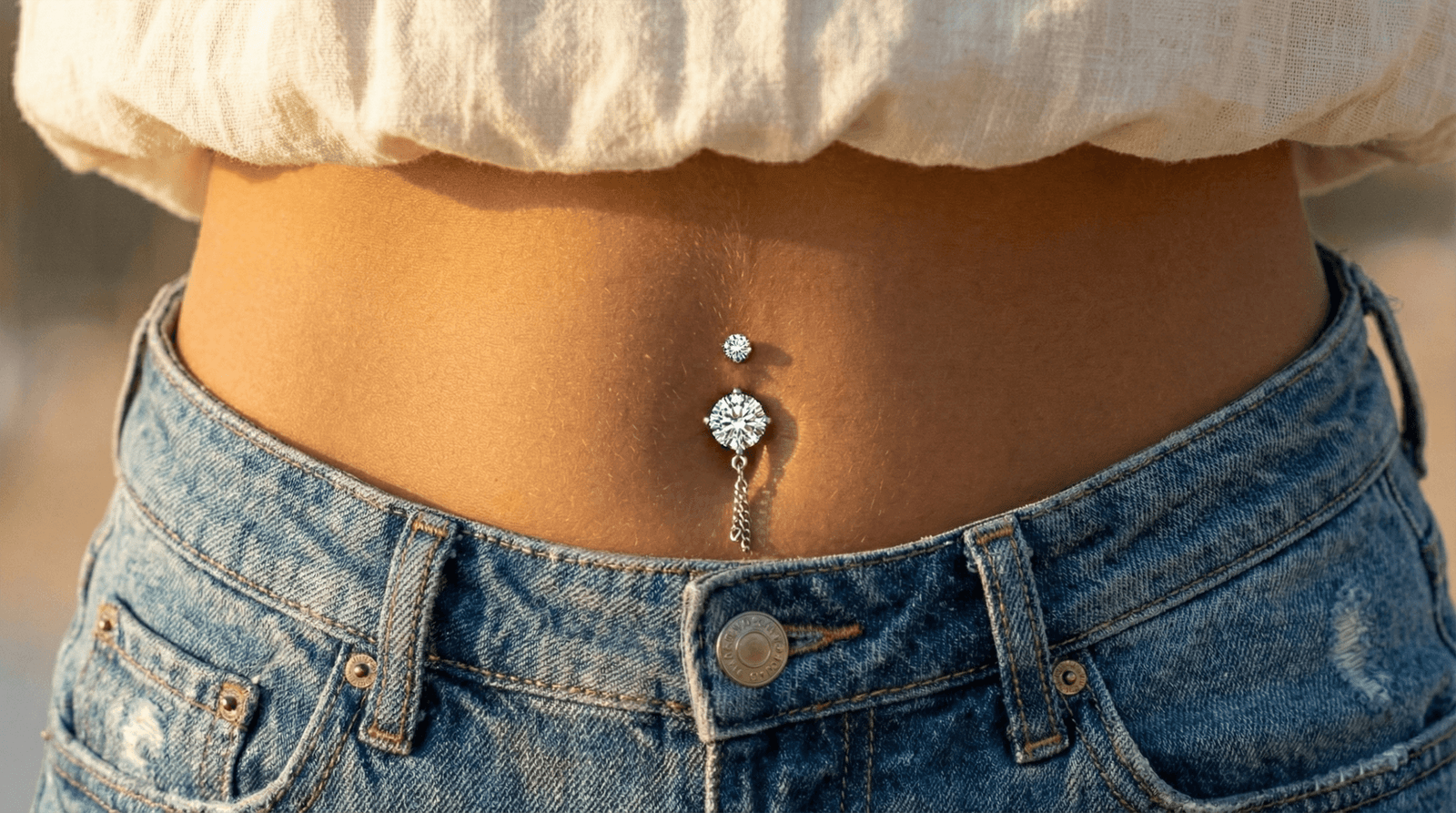
Belly button piercings, often called navel piercings, are among the most movement-exposed body piercings. Daily motion, waistbands, and moisture all influence how jewelry behaves in this area. Because of these factors, the material used matters more here than in many other placements.
A common question is whether silver piercings are safe for belly button piercings. Silver is widely used in fashion jewelry and appreciated for its bright, clean look. However, safety in piercing terms depends on how a material performs over time in a specific placement, not just how it looks.
This article explains how silver behaves in belly button piercings, when it may be acceptable, and when it is better avoided.
What Does “Silver Piercing” Usually Refer To?
In most cases, silver piercing jewelry means sterling silver. Sterling silver is an alloy made by combining pure silver with other metals to improve strength. Pure silver on its own is too soft for body jewelry.
While sterling silver is common in necklaces and earrings, its performance in body piercings varies depending on location. The navel is considered a more demanding area.
Why Belly Button Piercings Are More Demanding
The navel area bends and shifts constantly as the body moves. Clothing friction, sitting, and stretching all place pressure on the jewelry. Moisture can also collect more easily compared to ear piercings.
These conditions require jewelry that maintains a smooth surface and remains stable despite frequent movement.
Are Silver Piercings Safe for Healed Belly Button Piercings?
Silver piercings can be safe for fully healed belly button piercings when worn thoughtfully.
Once healing is complete, the skin is generally less reactive. At this stage, silver jewelry may be worn occasionally without immediate issues, especially for short periods or styling purposes.
That said, silver is not usually ideal for continuous, everyday wear in the navel area. Over time, exposure to moisture and body chemistry can cause oxidation, which may affect both the jewelry and the surrounding skin.
Why Silver Is Not Recommended for New Belly Button Piercings
Silver is generally not considered a safe option for new belly button piercings.
During the healing process, the piercing channel is more sensitive. Silver alloys may react with moisture and natural skin oils, increasing the likelihood of irritation. Silver is also relatively soft, which means its surface can wear down faster and become harder to keep consistently clean.
For this reason, silver is typically avoided during the initial healing phase.
Potential Issues Associated With Silver Belly Button Piercings
Some commonly observed concerns include oxidation that causes the jewelry to darken, temporary discoloration of the surrounding skin, increased irritation from friction and movement, and loss of shine with frequent wear.
These issues do not affect everyone, but they are common enough to be worth considering before choosing silver for this placement.
When Silver May Be an Acceptable Option
Silver piercings may be considered safe for belly button piercings if the piercing is fully healed, the jewelry is worn occasionally rather than daily, the design is lightweight and smooth, and the skin shows no signs of sensitivity.
In these cases, silver can function as a temporary or style-focused option rather than a long-term solution.
Styling Considerations for Belly Button Piercings
Simple, minimal designs generally perform better in the navel area. Smaller ends and balanced weight reduce unnecessary movement and friction.
If silver jewelry is chosen, avoiding heavy or highly detailed designs can help reduce surface wear and oxidation.
Final Thoughts
So, are silver piercings safe for belly button piercings? They can be, but only under specific conditions.
Silver may be suitable for healed piercings and occasional wear. For new piercings or constant daily use, it is usually not the most reliable option. The belly button area places unique demands on jewelry, making material choice especially important.
Understanding how silver interacts with this placement allows for safer and more informed piercing decisions.

Leave a Reply