
Winter is officially here. While we love the cozy sweaters and hot cocoa, there’s one thing piercing enthusiasts don’t love: that sudden, sharp ache in the ear when the cold wind hits.
If you’ve recently gotten a new piercing (or even if you have well-healed ones), you might notice they act up when the temperature drops. Is it normal for piercings to hurt in the cold? Does winter slow down the healing process?
The short answer is: Yes, cold weather affects your piercings. But with the right knowledge, you can keep your ear projects healthy through the snow. Here is the complete guide to winter piercing care.
Why Do Piercings Hurt in the Cold?
It’s not in your head—the pain is physiological.
- Reduced Blood Flow (Vasoconstriction): When your body gets cold, it constricts blood vessels to preserve heat for your vital organs. Since your ears (and nose) are extremities with thin skin and cartilage, they lose blood flow first. Less blood flow means the tissue becomes stiff and more sensitive, leading to that “throbbing” ache.
- The “Cold Metal” Effect: Metal conducts temperature much faster than skin. If you are wearing jewelry made of certain conductive metals or large steel hoops, the jewelry gets freezing cold instantly, acting like a tiny ice pack directly inside your piercing channel.
- Dryness: Winter air lacks humidity. This dryness can cause the skin around your piercing to crack, flake, or become irritated, making it susceptible to infection.
The Biggest Enemy: Hats and Scarves
According to professional piercers, the number one cause of winter piercing trauma isn’t the cold itself—it’s the accessories.
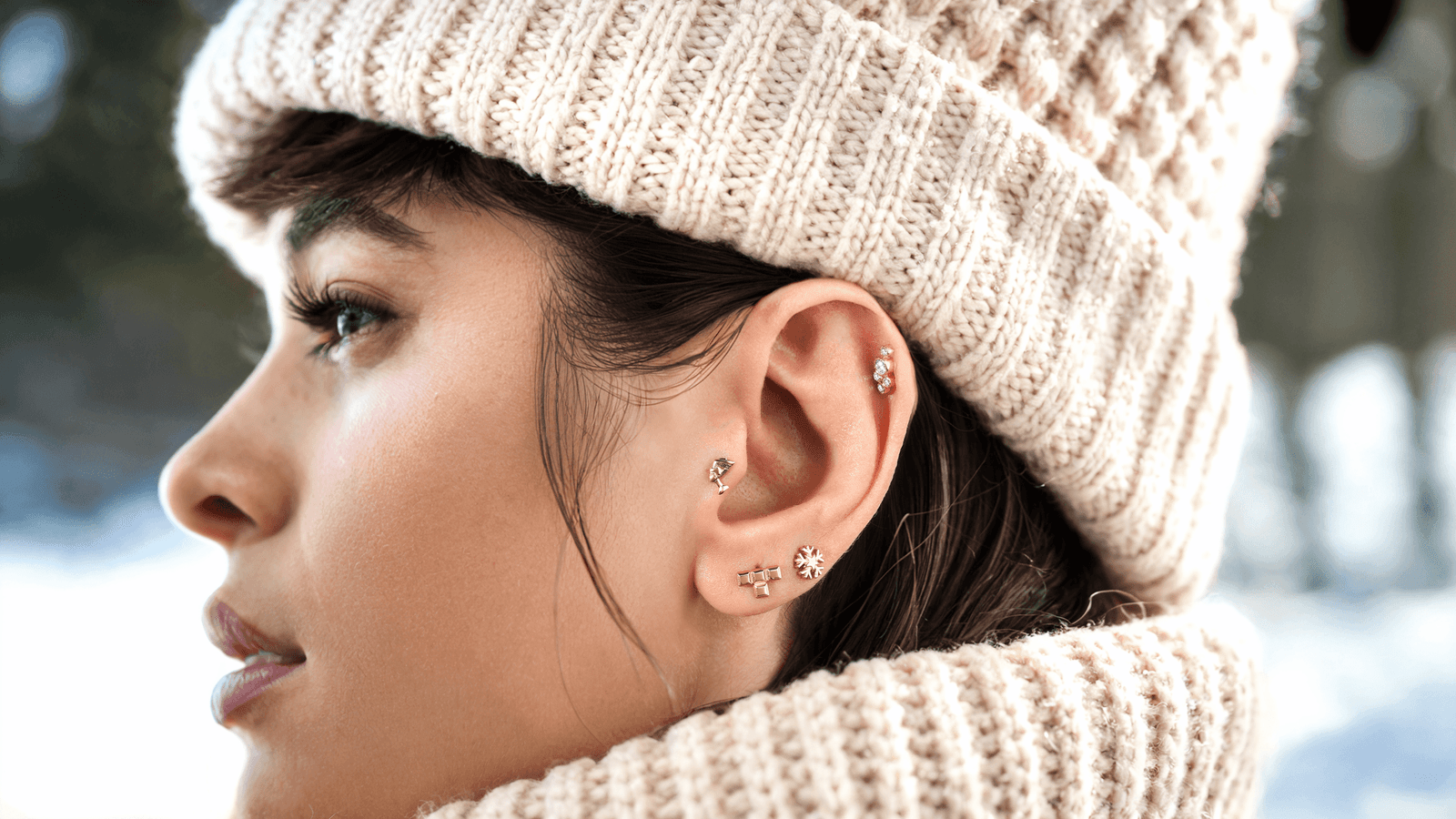
Knit beanies, wool hats, and chunky scarves are notorious for snagging. One wrong move while pulling off a beanie can yank a fresh helix or flat piercing, causing trauma, bumps (hypertrophic scarring), or tearing.
How to Protect Your Piercing:
- Be Gentle: Always pull hats and scarves apart widely before lifting them over your head.
- Choose the Right Fabric: Avoid loose-knit wool that jewelry prongs can get caught in. Opt for loose headbands or earmuffs that sit around the ear rather than pressing flat against a fresh piercing.
- Watch the Pressure: If you have a healing cartilage piercing, tight beanies can exert pressure, causing the angle of the piercing to migrate over time.
Skincare: Hydration is Key
Dry skin is itchy skin. And when a piercing itches, the urge to touch it increases (which creates a risk of infection).
- Don’t Over-Clean: In winter, over-cleaning with harsh saline or soap can strip natural oils. Experts recommend sticking to a sterile saline spray twice a day.
- Moisturize Carefully: You can use a tiny bit of natural oil (like Jojoba or Emu oil) on the outer ear to prevent cracking. However, never put lotion or heavy creams directly into an open or unhealed wound.
Why Material Matters More in Winter
This is the season where the quality of your jewelry truly shows.
Jewelry containing high amounts of nickel or mystery alloys can react poorly to temperature changes and irritate sensitive winter skin.
The Expert Recommendation: Switching to 14K Solid Gold or Implant Grade Titanium can make a huge difference. These materials are biocompatible and tend to have a smoother finish. Unlike plated jewelry that might flake off due to friction from hats and scarves, solid materials remain safe and intact.
Pro Tip: If you are wearing large hoops, consider visiting your piercer to switch to studs (flat backs) for the winter season. Studs stay closer to the skin, retain body heat better, and are less likely to get snagged on your scarf compared to rings.
Does Healing Take Longer in Winter?
It can. Because your body is working overtime to keep you warm and fight off seasonal colds and flus, your immune system might be slightly distracted. This can theoretically slow down the collagen production needed to heal a piercing.
To boost healing:
- Stay hydrated (drink water, not just coffee!).
- Ensure your diet is rich in Vitamin C and Zinc.
- Keep the piercing warm but breathable.
The Takeaway
Don’t let the cold stop you from getting that dream piercing. Winter is actually a great time to get pierced because we tend to stay indoors and rest more, avoiding summer risks like swimming pools and sand.
Just remember: Watch out for the scarf, keep the area moisturized, and ensure you are wearing high-quality jewelry.
Have you experienced “winter ache” in your piercings? Let us know in the comments below!

Leave a Reply