
Hoops look simple, but sizing is what makes them feel intentional. The same hoop can read sleek, bold, or slightly awkward depending on diameter, placement, and how close it sits to the ear.
This guide breaks down hoop diameter in a practical way so you can choose a size that fits comfortably and looks balanced across lobes and cartilage placements.
What “Hoop Size” Means
Hoop size usually refers to inner diameter (ID) measured in millimeters.
Inner diameter (ID) is the space inside the hoop.
Outer diameter (OD) is the full size including the metal thickness.
Gauge is the thickness of the hoop’s post, commonly 18G or 16G for many ear piercings.
If you see “8mm hoop,” that is typically 8mm inner diameter.
Common Hoop Diameters and How They Look
These ranges are a helpful mental model for ear piercings:
6mm ID is very snug, close to the skin, clean and minimal.
7mm ID is snug with a bit more comfort, still crisp.
8mm ID is a classic everyday “just right” look for many ears.
9mm to 10mm ID is visibly looser, more hoop presence.
11mm to 12mm ID is statement leaning, more movement and swing.
Your anatomy and the placement location decide whether snug feels perfect or too tight.
Placement Guide: Typical Diameter Ranges That Work
These are styling-friendly starting points, not medical advice, just fit and look guidance.
Lobe
8mm to 12mm is the most common visual range.
Choose smaller for a neat, close fit.
Choose larger for a more classic hoop look with movement.
Helix
6mm to 10mm.
Small diameters feel sharp and minimal.
Mid diameters give breathing room and a more noticeable circle.
Conch
10mm to 14mm.
Conch hoops need more diameter to wrap around the ear’s center area.
This placement is where too small becomes obvious fast.
Tragus and Forward Helix
6mm to 8mm.
Usually looks best when it sits close and intentional.
Daith and Rook Area Styling
These vary a lot by anatomy.
If you want a hoop-like look here, most people prefer a snug but not pinching diameter.
How to Pick Between Two Sizes
If you’re stuck between two sizes, use this decision rule:
Want sleek and close: pick the smaller diameter.
Want more hoop visibility: pick the larger diameter.
Want comfort first: pick the larger diameter, especially for cartilage.
Visual Balance Tips
Sizing is not only about fit. It is also about proportions.
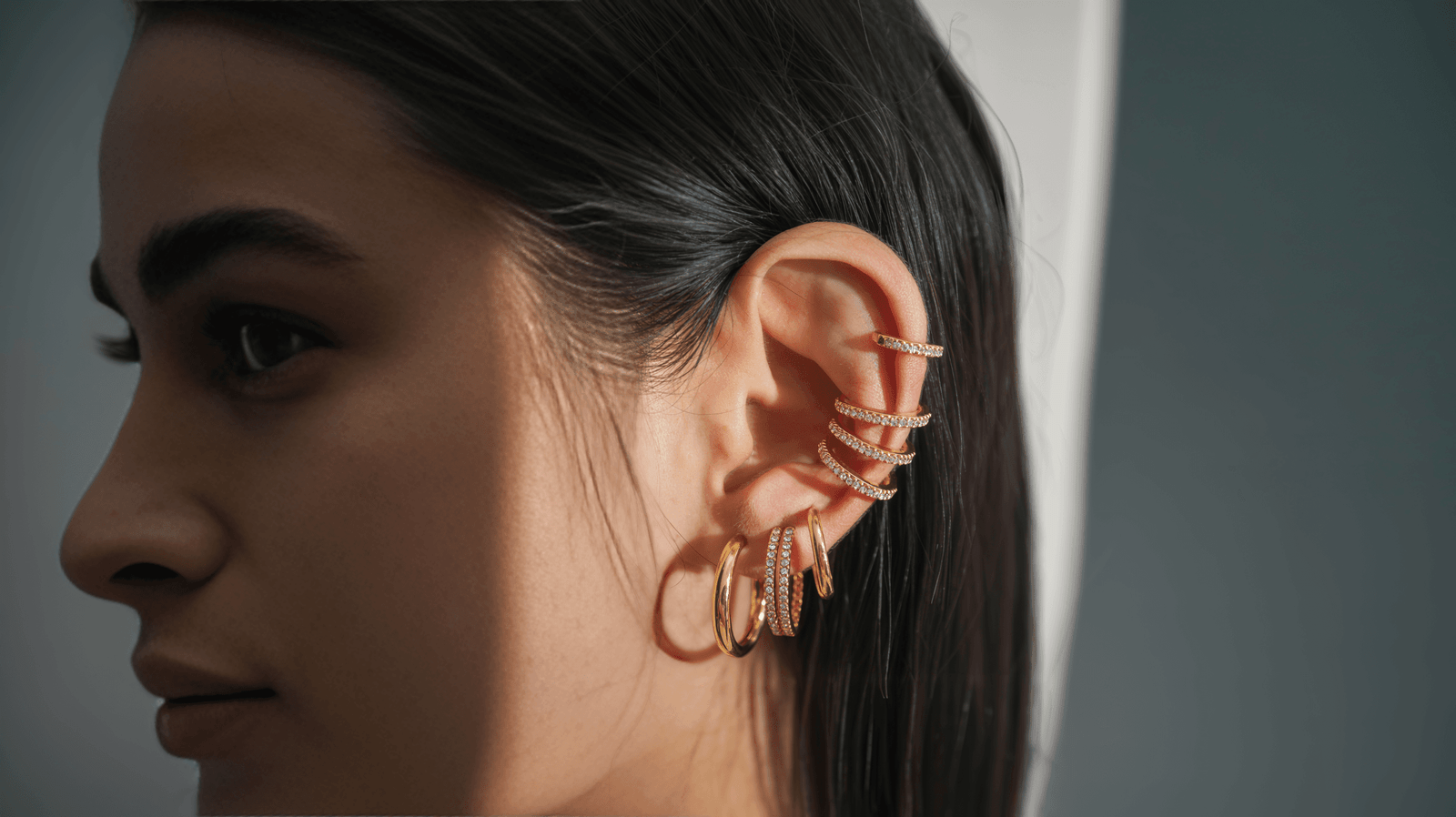
If you wear one hoop with multiple studs, keep the hoop smaller so the ear does not look crowded.
If you wear multiple hoops, stagger diameters, for example 8mm lobe and 7mm helix, for a cleaner flow.
If your ear stack feels busy, reduce hoop diameter or switch one hoop to a tiny stud.
If you mix metals, keep diameters similar across metals to avoid visual chaos.
Quick Mistakes to Avoid
Choosing a hoop so small it looks like it is pulling the ear.
Going too large on the helix if you want a minimal look.
Matching every hoop to the exact same diameter in a multi-hoop ear stack.
Conclusion
A good hoop size makes the ear look planned, not random. Start by thinking in inner diameter, then choose based on placement and the amount of circle you want to show. If you build a stack, vary sizes slightly to keep the look balanced and clean.

Leave a Reply